Buy oexp.eu ?
We are moving the project
oexp.eu .
Are you interested in purchasing the domain
oexp.eu ?
domain@kv-gmbh.de · 0541-91531010
Buy oexp.eu ?
What is faster, 0 or 100?
100 is faster than 0. When comparing the two numbers, 100 represents a higher value and therefore implies a greater speed or quantity. In the context of speed, reaching 100 is faster than reaching 0. **
What is the purpose of indicating 0-100 km/h?
Indicating 0-100 km/h provides a measure of acceleration, showing how quickly a vehicle can reach a speed of 100 km/h from a standstill. This information is useful for comparing the performance of different vehicles, as well as for assessing the overall speed and power of a vehicle. It can also be a helpful reference for drivers to understand the capabilities of their vehicle in terms of acceleration. **

Similar search terms for 0-100
Top-Angebote
Products related to 0-100:
-
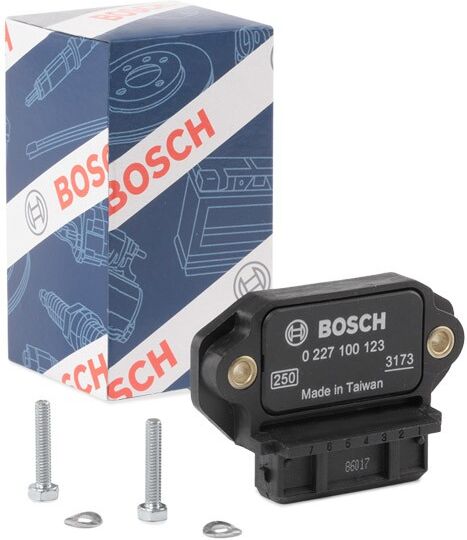
Bosch 0 227 100 123 Ignition moduleConstruction Year to: 08/1983, 09/1982, 12/1982, 10/1984, 01/1990, 12/1984, 12/1989, 09/1983, 06/1986, 04/1984, 04/1988, 04/1989, 05/1987, 03/1993, 07/1988, 05/1990, 05/1984, 06/1983, 12/1988, 10/1987, 10/1994, 06/1988, 12/1993, 09/1990, 06/1990, 09/1993, 02/1994, 07/1987, 10/1990, 06/1987, 05/1985, 12/1985, 12/1990, 05/1988, 10/1989, 04/1985, 08/1991, 01/1984, 08/1987; Engine Code: 18 4E Z<M 10 B 18>; Construction Year from: 09/1980, 10/1981, 02/1986, 09/1983, 10/1982, 04/1981, 06/1981, 01/1987, 09/1979, 07/1982, 05/1984, 03/1987, 07/1984, 06/1989, 05/1980, 10/1987, 11/1990, 12/1989, 07/1988, 04/1988, 01/1984, 10/1985, 03/1986, 09/1986, 05/1986, 06/1985, 01/1986, 03/1988, 06/1990, 06/1984, 01/1990, 11/1986, 01/1983, 09/1988, 10/1980, 09/1987, 10/1986, 07/1987, 07/1986, 06/1986, 10/1984, 11/1977; Manufacturer Restriction: DUCELLIER, Bosch; TecDoc Engine Number: 4809, 28323; for RPO number from: 3348; for RPO number up to: 4192, 4157, 4578, 3851, 4956, 4205, 4710; Coil Ignition System: for transistor ignition (TI); RICAMBI Number from: 24430137,49 £*Shipping: 8,45 £Secure redirect to the provider
-
Bosch 0 227 100 023 Ignition moduleVehicle Identification Number (VIN) to: A039226, F005221; Vehicle Identification Number (VIN) from: 096469; Construction Year from: 09/1976, 09/1981, 04/1982; Construction Year to: 08/1985, 08/1989; Vehicle type: <460..>48,99 £*Shipping: 8,45 £Secure redirect to the provider
-
Bosch 0 986 477 100 Brake drumFitting Position: Rear Axle; Inner brake drum diameter [mm]: 230; Outer brake drum diameter [mm]: 265; Inner brake drum height [mm]: 50; Total brake drum height [mm]: 66; Bolt Hole Circle Ø [mm]: 100; Number of Holes: 4; Centering Diameter [mm]: 57; Braking/Driving Dynamics: for vehicles without ABS; TecDoc Engine Number: 14920, 14923, 16169, 16394, 17477, 17583, 17590, 17618, 17631, 17636, 17926, 17937, 39510, 4782, 4796, 4819, 4820; Construction Year from: 03/1998, 03/2003, 07/1995, 07/2002, 09/1994, 09/1995, 09/1996, 09/1997, 09/1999, 09/2000, 09/2002, 09/2004; Construction Year to: 01/2004, 02/1998, 02/2004, 05/2006, 06/2004, 06/2009, 07/2009, 08/1997, 08/1998, 08/2000, 08/2002, 08/2003, 08/2004, 08/2005, 09/2003, 09/2007, 12/1998; Vehicle Identification Number (VIN) from: T2500001, T5000001, T6000001, T8000001, TP000001; Vehicle Identification Number (VIN) to: 12999999, 15999999, 16999999, 18999999, 32999999, 35999999, 36999999, 38999999, 3G999999, W..., W7999999; Engine Code: 17 TD/TC4<OHC EE1>, C 16 SEL, C 16 SEL<DOHC>, X 18 XE<DOHC>, Y 13 DT<Ecotec>, Y 16 YNG, Z 16 YNG; for OE number: 93189219; for model code/type code: M99, T9263,98 £*Shipping: 8,45 £Secure redirect to the provider
-
Bosch 0 986 474 100 Brake caliperExchange Part: ; Piston Diameter [mm]: 48; Inner Width [mm]: 55,5; Material: Aluminium; Brake Caliper Type: Floating Caliper; Paired product: 0 986 473 100; Brake System: BOSCH; Brake System: Bosch; TecDoc Engine Number: 14728, 14729, 16193, 2775, 2777, 2786, 2834, 2839, 2857, 2859, 2864, 2871, 2879, 33011, 4266, 4836, 4846, 5080, 6554; Construction Year from: 03/1988, 03/2000, 06/1986, 06/1990, 06/1991, 06/2000, 07/1987, 07/1988, 07/1989, 07/1992, 07/2000, 09/1992, 10/1986, 10/1987, 10/1990, 11/1987, 11/1988, 11/1990; Construction Year to: 03/1994, 04/1994, 04/1996, 06/1988, 09/1990, 09/2003, 10/1987, 10/1990, 10/1997, 12/1988, 12/1989, 12/1990, 12/1992, 12/1995; Vehicle Identification Number (VIN) from: 50821832; Engine Code: 108C<XV8>, 109F<XW7>, 162<XUD9>, B1A/A<XU51C>, B1A<XU51C>, B1B<XU51C>, B1D<XU51C>, B1E<XU51C>, B2A<XU52C>, B2B<XU52C>, B2C<XU52C>, B3A<XU51CTR>, BDY<XU5M>, D2A<XU92C>, D2C<XU92C>, D5A<XU92CTR>, D9A<XUD9>, DJZ<XUD9Y>, HDY<TU1M>, HDY<TU3M/Z>, J2A<J2>, K1A<TU3>, K2D<TU3.2/K>, K2D<TU3.2>, K2D<TU3F2>, K5A<TU3.2/Z>, K9A<TUD3>, K9B<TUD3>, KDX<TU3FMC>, KDY<TU3FM>, KDY<TU3M/Z>, VJX<TUD5B>; for OE number: 4400 68, 4400 69, 4400 K1, 4400 K2; Rim Hole Number: 4; Fitting Position: Front Axle Right; Body Type: Saloon, Van; Brake Disc Type: solid; Braking/Driving Dynamics: for vehicles without ABS; Suspension: for vehicles with heavy duty suspension89,99 £*Shipping: 8,45 £Secure redirect to the provider


-
How can one make themselves unlikable from 0 to 100?
One can make themselves unlikable by being consistently negative and critical of others, constantly seeking attention and validation, being dishonest and untrustworthy, showing a lack of empathy and consideration for others, and being selfish and self-centered. Additionally, being disrespectful, rude, and inconsiderate towards others, and consistently displaying a lack of integrity and accountability can also contribute to making oneself unlikable. Overall, consistently displaying these negative traits and behaviors can quickly turn people off and make one unlikable from 0 to 100. **
-
What is the purpose of specifying 0-100 km/h?
Specifying 0-100 km/h is a common way to measure the acceleration performance of a vehicle. It provides a standardized benchmark for comparing the speed at which different vehicles can reach 100 km/h from a standstill. This measurement is important for car enthusiasts, manufacturers, and consumers as it gives an indication of a vehicle's overall performance and speed capabilities. It is also used in marketing and advertising to highlight the acceleration prowess of a particular vehicle model. **
-
How does the GPU usage jump between 0 and 100?
The GPU usage can jump between 0 and 100 based on the demand of the tasks being performed. When the GPU is idle or not being utilized, the usage will be at 0. However, when a task that requires GPU processing is initiated, the usage will quickly jump to 100 as the GPU is fully engaged in performing the task. Once the task is completed or the demand decreases, the GPU usage will drop back down to 0 or a lower level. This fluctuation in GPU usage is a reflection of the dynamic nature of computing tasks and the GPU's ability to adapt to varying workloads. **
-
Does a car take longer to accelerate from 0 to 100 or from 100 to 200?
A car typically takes longer to accelerate from 100 to 200 than from 0 to 100. This is because as the car's speed increases, the air resistance also increases, making it harder for the car to accelerate. Additionally, the car's engine may not be as efficient at higher speeds, requiring more power to continue accelerating. Therefore, the car's acceleration from 100 to 200 will generally be slower than from 0 to 100. **


How can one accelerate from 0 to 100 in 5 seconds?
To accelerate from 0 to 100 in 5 seconds, you would need a vehicle with a high horsepower engine and a strong torque output. Additionally, the vehicle should have a good power-to-weight ratio and efficient transmission system to transfer power to the wheels quickly. Proper traction and grip from the tires are also essential for a quick acceleration. Finally, the driver should have good driving skills and be able to control the vehicle effectively during the acceleration process. **
How is it possible for the GPU to jump from 0 to 100 and then back to 0?
The GPU can jump from 0 to 100 and back to 0 due to the dynamic nature of its workload. When a demanding task is initiated, the GPU quickly ramps up to 100% utilization to handle the workload efficiently. Once the task is completed, the GPU returns to 0% utilization as it no longer needs to process the workload. This fluctuation in GPU utilization is a normal part of its operation and is designed to efficiently allocate resources as needed. **
Top-Angebote
Products related to 0-100:
-
Bosch 0 261 500 100 InjectorFuel Type: Petrol; Fuel Mixture Formation: Direct Injection; Construction Year from: 07/2010, 06/2011, 01/2016; Construction Year to: 07/2015, 06/2018, 09/2014, 04/2017, 07/2016; TecDoc Engine Number: 26604; for OE number: 35310 2B13060,99 £*Shipping: 8,45 £Secure redirect to the provider
-
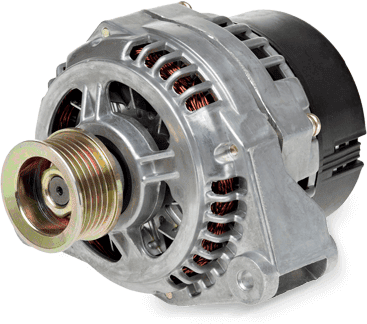
Bosch 0 986 039 100 AlternatorExchange Part: ; Voltage [V]: 14; Alternator Charging Current [A]: 80; Fastening Type: Double Pivot Lever; Alternator Type: excl. vacuum pump; Distance from belt pulley to alternator [mm]: 69; Rotation Direction: Clockwise rotation; Pulleys: with multi-belt pulley; Number of grooves: 6; Belt Pulley Ø [mm]: 50; Length [mm]: 231; Recommended additional repairs: V-Belt/V-ribbed Belt; TecDoc Engine Number: 28375, 28376, 28377, 28378, 28380, 28382; Construction Year from: 03/1992, 09/1994, 10/1991; Construction Year to: 12/1995; usable for vehicles with alternator charging current [A]: 80212,99 £*Shipping: 1,99 £Secure redirect to the provider
-
Bosch 0 227 100 123 Ignition moduleConstruction Year to: 08/1983, 09/1982, 12/1982, 10/1984, 01/1990, 12/1984, 12/1989, 09/1983, 06/1986, 04/1984, 04/1988, 04/1989, 05/1987, 03/1993, 07/1988, 05/1990, 05/1984, 06/1983, 12/1988, 10/1987, 10/1994, 06/1988, 12/1993, 09/1990, 06/1990, 09/1993, 02/1994, 07/1987, 10/1990, 06/1987, 05/1985, 12/1985, 12/1990, 05/1988, 10/1989, 04/1985, 08/1991, 01/1984, 08/1987; Engine Code: 18 4E Z<M 10 B 18>; Construction Year from: 09/1980, 10/1981, 02/1986, 09/1983, 10/1982, 04/1981, 06/1981, 01/1987, 09/1979, 07/1982, 05/1984, 03/1987, 07/1984, 06/1989, 05/1980, 10/1987, 11/1990, 12/1989, 07/1988, 04/1988, 01/1984, 10/1985, 03/1986, 09/1986, 05/1986, 06/1985, 01/1986, 03/1988, 06/1990, 06/1984, 01/1990, 11/1986, 01/1983, 09/1988, 10/1980, 09/1987, 10/1986, 07/1987, 07/1986, 06/1986, 10/1984, 11/1977; Manufacturer Restriction: DUCELLIER, Bosch; TecDoc Engine Number: 4809, 28323; for RPO number from: 3348; for RPO number up to: 4192, 4157, 4578, 3851, 4956, 4205, 4710; Coil Ignition System: for transistor ignition (TI); RICAMBI Number from: 24430137,49 £*Shipping: 8,45 £Secure redirect to the provider
-
Bosch 0 227 100 023 Ignition moduleVehicle Identification Number (VIN) to: A039226, F005221; Vehicle Identification Number (VIN) from: 096469; Construction Year from: 09/1976, 09/1981, 04/1982; Construction Year to: 08/1985, 08/1989; Vehicle type: <460..>48,99 £*Shipping: 8,45 £Secure redirect to the provider
-
What is faster, 0 or 100?
100 is faster than 0. When comparing the two numbers, 100 represents a higher value and therefore implies a greater speed or quantity. In the context of speed, reaching 100 is faster than reaching 0. **
-
What is the purpose of indicating 0-100 km/h?
Indicating 0-100 km/h provides a measure of acceleration, showing how quickly a vehicle can reach a speed of 100 km/h from a standstill. This information is useful for comparing the performance of different vehicles, as well as for assessing the overall speed and power of a vehicle. It can also be a helpful reference for drivers to understand the capabilities of their vehicle in terms of acceleration. **
-
How can one make themselves unlikable from 0 to 100?
One can make themselves unlikable by being consistently negative and critical of others, constantly seeking attention and validation, being dishonest and untrustworthy, showing a lack of empathy and consideration for others, and being selfish and self-centered. Additionally, being disrespectful, rude, and inconsiderate towards others, and consistently displaying a lack of integrity and accountability can also contribute to making oneself unlikable. Overall, consistently displaying these negative traits and behaviors can quickly turn people off and make one unlikable from 0 to 100. **
-
What is the purpose of specifying 0-100 km/h?
Specifying 0-100 km/h is a common way to measure the acceleration performance of a vehicle. It provides a standardized benchmark for comparing the speed at which different vehicles can reach 100 km/h from a standstill. This measurement is important for car enthusiasts, manufacturers, and consumers as it gives an indication of a vehicle's overall performance and speed capabilities. It is also used in marketing and advertising to highlight the acceleration prowess of a particular vehicle model. **
Similar search terms for 0-100
-
Bosch 0 986 477 100 Brake drumFitting Position: Rear Axle; Inner brake drum diameter [mm]: 230; Outer brake drum diameter [mm]: 265; Inner brake drum height [mm]: 50; Total brake drum height [mm]: 66; Bolt Hole Circle Ø [mm]: 100; Number of Holes: 4; Centering Diameter [mm]: 57; Braking/Driving Dynamics: for vehicles without ABS; TecDoc Engine Number: 14920, 14923, 16169, 16394, 17477, 17583, 17590, 17618, 17631, 17636, 17926, 17937, 39510, 4782, 4796, 4819, 4820; Construction Year from: 03/1998, 03/2003, 07/1995, 07/2002, 09/1994, 09/1995, 09/1996, 09/1997, 09/1999, 09/2000, 09/2002, 09/2004; Construction Year to: 01/2004, 02/1998, 02/2004, 05/2006, 06/2004, 06/2009, 07/2009, 08/1997, 08/1998, 08/2000, 08/2002, 08/2003, 08/2004, 08/2005, 09/2003, 09/2007, 12/1998; Vehicle Identification Number (VIN) from: T2500001, T5000001, T6000001, T8000001, TP000001; Vehicle Identification Number (VIN) to: 12999999, 15999999, 16999999, 18999999, 32999999, 35999999, 36999999, 38999999, 3G999999, W..., W7999999; Engine Code: 17 TD/TC4<OHC EE1>, C 16 SEL, C 16 SEL<DOHC>, X 18 XE<DOHC>, Y 13 DT<Ecotec>, Y 16 YNG, Z 16 YNG; for OE number: 93189219; for model code/type code: M99, T9263,98 £*Shipping: 8,45 £Secure redirect to the provider
-
Bosch 0 986 474 100 Brake caliperExchange Part: ; Piston Diameter [mm]: 48; Inner Width [mm]: 55,5; Material: Aluminium; Brake Caliper Type: Floating Caliper; Paired product: 0 986 473 100; Brake System: BOSCH; Brake System: Bosch; TecDoc Engine Number: 14728, 14729, 16193, 2775, 2777, 2786, 2834, 2839, 2857, 2859, 2864, 2871, 2879, 33011, 4266, 4836, 4846, 5080, 6554; Construction Year from: 03/1988, 03/2000, 06/1986, 06/1990, 06/1991, 06/2000, 07/1987, 07/1988, 07/1989, 07/1992, 07/2000, 09/1992, 10/1986, 10/1987, 10/1990, 11/1987, 11/1988, 11/1990; Construction Year to: 03/1994, 04/1994, 04/1996, 06/1988, 09/1990, 09/2003, 10/1987, 10/1990, 10/1997, 12/1988, 12/1989, 12/1990, 12/1992, 12/1995; Vehicle Identification Number (VIN) from: 50821832; Engine Code: 108C<XV8>, 109F<XW7>, 162<XUD9>, B1A/A<XU51C>, B1A<XU51C>, B1B<XU51C>, B1D<XU51C>, B1E<XU51C>, B2A<XU52C>, B2B<XU52C>, B2C<XU52C>, B3A<XU51CTR>, BDY<XU5M>, D2A<XU92C>, D2C<XU92C>, D5A<XU92CTR>, D9A<XUD9>, DJZ<XUD9Y>, HDY<TU1M>, HDY<TU3M/Z>, J2A<J2>, K1A<TU3>, K2D<TU3.2/K>, K2D<TU3.2>, K2D<TU3F2>, K5A<TU3.2/Z>, K9A<TUD3>, K9B<TUD3>, KDX<TU3FMC>, KDY<TU3FM>, KDY<TU3M/Z>, VJX<TUD5B>; for OE number: 4400 68, 4400 69, 4400 K1, 4400 K2; Rim Hole Number: 4; Fitting Position: Front Axle Right; Body Type: Saloon, Van; Brake Disc Type: solid; Braking/Driving Dynamics: for vehicles without ABS; Suspension: for vehicles with heavy duty suspension89,99 £*Shipping: 8,45 £Secure redirect to the provider
-
Bosch 0 986 259 100 Exhaust gas temperature sensor (EGT)Construction Year from: 07/2007, 06/2008; Fitting Position: after soot particulate filter; TecDoc Engine Number: 21065, 20600, 23861, 21064; Construction Year to: 09/2012, 07/2009; Engine Code: CAMA<D4V/TA1>, CAPA<D50>74,99 £*Shipping: 8,45 £Secure redirect to the provider
-
How does the GPU usage jump between 0 and 100?
The GPU usage can jump between 0 and 100 based on the demand of the tasks being performed. When the GPU is idle or not being utilized, the usage will be at 0. However, when a task that requires GPU processing is initiated, the usage will quickly jump to 100 as the GPU is fully engaged in performing the task. Once the task is completed or the demand decreases, the GPU usage will drop back down to 0 or a lower level. This fluctuation in GPU usage is a reflection of the dynamic nature of computing tasks and the GPU's ability to adapt to varying workloads. **
-
Does a car take longer to accelerate from 0 to 100 or from 100 to 200?
A car typically takes longer to accelerate from 100 to 200 than from 0 to 100. This is because as the car's speed increases, the air resistance also increases, making it harder for the car to accelerate. Additionally, the car's engine may not be as efficient at higher speeds, requiring more power to continue accelerating. Therefore, the car's acceleration from 100 to 200 will generally be slower than from 0 to 100. **
-
How can one accelerate from 0 to 100 in 5 seconds?
To accelerate from 0 to 100 in 5 seconds, you would need a vehicle with a high horsepower engine and a strong torque output. Additionally, the vehicle should have a good power-to-weight ratio and efficient transmission system to transfer power to the wheels quickly. Proper traction and grip from the tires are also essential for a quick acceleration. Finally, the driver should have good driving skills and be able to control the vehicle effectively during the acceleration process. **
-
How is it possible for the GPU to jump from 0 to 100 and then back to 0?
The GPU can jump from 0 to 100 and back to 0 due to the dynamic nature of its workload. When a demanding task is initiated, the GPU quickly ramps up to 100% utilization to handle the workload efficiently. Once the task is completed, the GPU returns to 0% utilization as it no longer needs to process the workload. This fluctuation in GPU utilization is a normal part of its operation and is designed to efficiently allocate resources as needed. **
* All prices are inclusive of VAT and, if applicable, plus shipping costs. The offer information is based on the details provided by the respective shop and is updated through automated processes. Real-time updates do not occur, so deviations can occur in individual cases. ** Note: Parts of this content were created by AI.